
How Septic Pumping Works: Step by Step
What happens from the moment the truck pulls into your driveway in Colonie, Clifton Park, or Brunswick to the moment you get your service record. Most visits take 30 to 60 minutes.
Get a Free Quote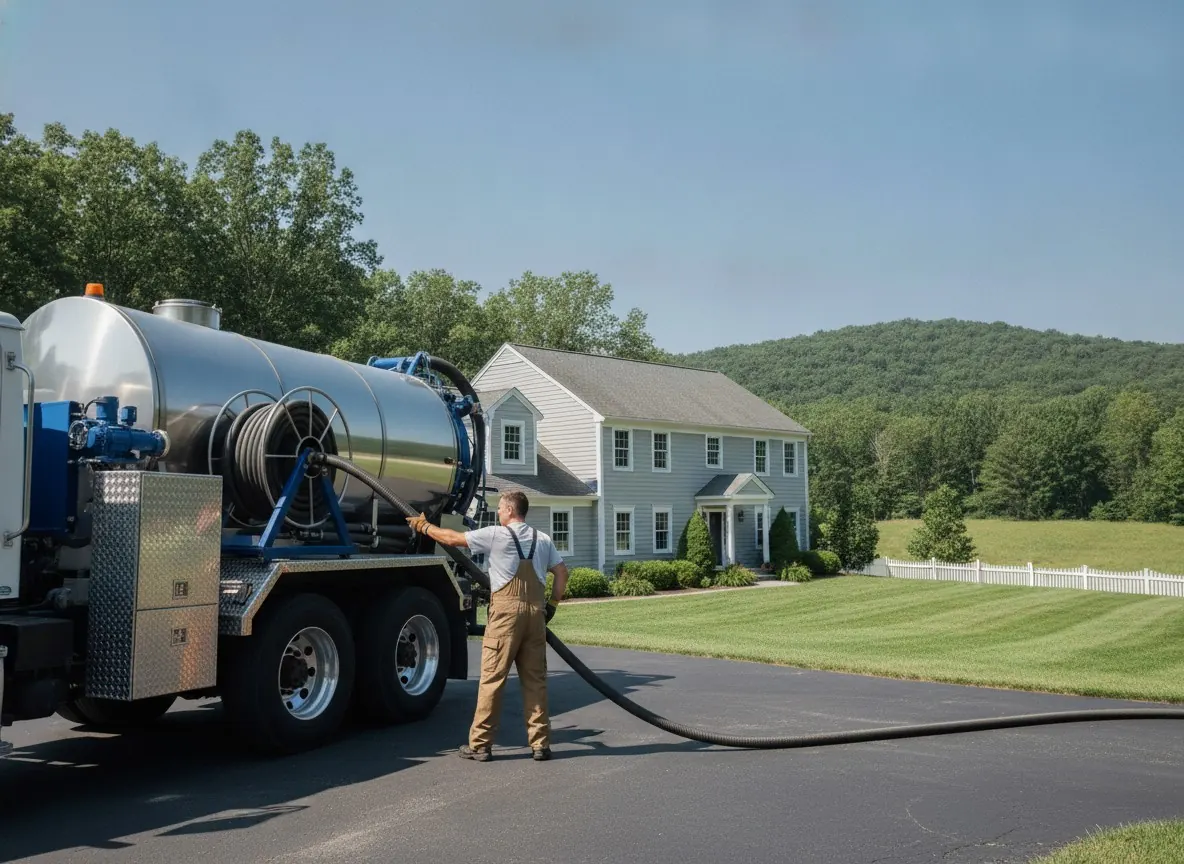
Before the Visit
Clear vehicles so the truck can park within roughly 100 feet of the tank. If you know where the lid is, mark it with a flag or stake. If you have the original permit sketch from the county health department, keep it handy. Keep pets inside and let us know about underground utilities, sprinkler lines, or invisible fences near the tank.
You do not need to stop using water the night before, but avoid running laundry during the visit so the technician can read the resting liquid level.
The Five Steps of a Pump-Out
Locate the lid
Many Capital Region tanks sit 10 to 20 feet from the foundation on the side where the main drain exits. If the lid is at grade or under a riser, this takes a minute. If it is buried, the technician probes the lawn, checks the county permit sketch if you have one, and digs to the access cover. Appendix 75-A calls for covers to be accessible and for extension collars when the manhole sits more than 12 inches below grade, which is why we suggest a riser on any buried lid.
Open and inspect
With the cover off, the technician measures the scum layer on top and the sludge layer on the bottom. Halfmoon's code uses a practical rule: pump when scum is within 3 inches of the outlet or sludge within 10 inches. The liquid level also tells a story. A level above the outlet pipe points to a drain-field problem; a level below it suggests a leaking tank.
Pump and clean
The vacuum hose goes in and the full contents come out: liquid, sludge, and scum. The technician breaks up the scum mat and agitates the sludge so nothing is left caked on the floor. Pumping only the liquid is faster but leaves the solids that cause the next backup, so a full pump-out is the standard. On a 1,000-gallon tank this step takes roughly 20 to 30 minutes.
Inspect baffles and filter
With the tank empty, the inlet and outlet baffles are visible. Missing, cracked, or corroded baffles let solids reach the drain field and are noted for repair. If the outlet has an effluent filter, it is pulled, rinsed, and reset. A heavily fouled filter is the most common cause of a slow drain on an otherwise healthy system.
Close and record
The lid is re-seated, any dug area is backfilled and tamped, and the site is left clean. You receive a record of tank size, measured layers, baffle and filter condition, and the next recommended pump-out date based on household size and tank volume. The septage is hauled to an approved disposal site such as the Albany County plant in Menands.
After Pumping: What to Do
- Resume normal water use; the tank refills with water within a day or two, which is expected
- Spread laundry across the week rather than running six loads on Saturday
- Keep grease, wipes, and coffee grounds out of the drains
- Skip additives: they do not replace pumping and some harm the drain field
- Note the next due date on your calendar, typically three to five years out per EPA guidance
- Consider a riser if the lid had to be dug up
Pricing for each step and add-on is on the cost page. Selling your house? Pair the pump-out with a real-estate inspection so the buyer sees the empty tank.
Need your tank pumped?
Free quotes across Albany, Schenectady, Rensselaer and Saratoga counties.