Septic pumping across the Capital Region · Free quotes · Fast scheduling

Grease Trap Pumping for Capital Region Restaurants

Scheduled and on-call grease trap and interceptor pumping for restaurants, cafeterias, and commercial kitchens in Albany, Saratoga Springs, Troy, and Schenectady.

Get a Free Quote
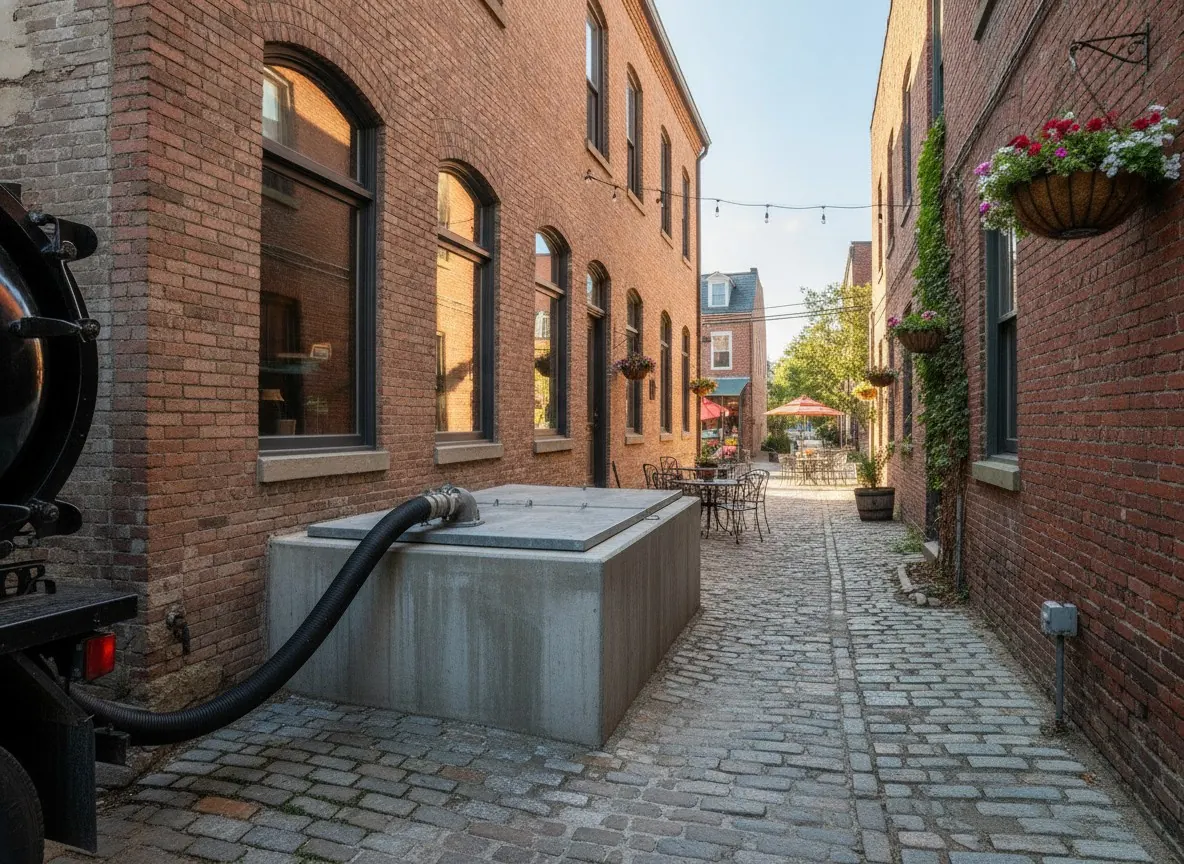
Vacuum hose connected to an open in-ground grease interceptor behind a brick restaurant building

Grease is the number one cause of kitchen drain backups

Every fryer, flat-top, and dish sink in a commercial kitchen sends fats, oils, and grease down the drain. The trap or interceptor catches them before they reach the sewer or septic tank. When it is full, grease passes straight through, cools, and hardens in the line. The result is a slow floor drain on a Friday night, then a backup, then a health inspection problem.

Restaurants on Lark Street in Albany, Broadway in Saratoga Springs, and River Street in Troy are on municipal sewer, where the sewer authority watches grease closely. Rural restaurants and banquet halls in Malta, Brunswick, or Duanesburg are often on septic, where grease kills drain fields. Either way, regular pumping is cheaper than the alternative.

Two kinds of grease traps, two kinds of service

Indoor grease traps (30–200 gallons)

Small units under or beside the sink line. They fill fast, sometimes weekly in a high-volume kitchen. Service is quick: pump, scrape, rinse, reset the baffle, and log it. We can schedule these before opening so there is no smell during service.

Outdoor interceptors (750–1,500 gallons)

In-ground concrete or plastic tanks outside the building, often in the parking lot. These need a vacuum truck and a full pump-down, not a skim. We remove the grease cap, the liquid, and the settled solids, then scrape the walls and check the inlet and outlet tees.

The quarter rule: most health departments and sewer authorities expect a trap to be pumped once grease and solids reach 25 percent of its liquid depth. Keep the manifests on site; inspectors ask.

How grease trap pumping works

  1. Schedule around your service hours

    Early morning or between lunch and dinner. Route customers get a fixed interval so the trap never hits the quarter mark.

  2. Full pump-down

    We remove everything, not just the grease layer. Skimming leaves solids that shorten the time to the next call.

  3. Scrape and inspect

    Walls, baffles, and tees are scraped and checked. A broken outlet tee lets grease straight into the sewer line and is a cheap fix when caught early.

  4. Haul and document

    Grease waste goes to a permitted facility. The Albany County WPD North Plant in Menands accepts septic and grease waste; Saratoga County Sewer District publishes a hauled-waste fee schedule. You get a manifest with the disposal site, date, and volume.

Grease trap pumping cost

Typical ranges. Volume contracts for multi-location operators are quoted separately.

ServiceTypical range
Grease trap pumping (indoor trap to outdoor interceptor)$150–$450
Emergency / after-hours call+$150–$400
Septic tank pump-out for restaurants on septic, 1,500 gallon$400–$800
Septic tank pump-out, 2,000 gallon$600–$1,100

Small indoor traps sit at the bottom of the range; a 1,500-gallon interceptor that has not been pumped in a year sits at the top. Residential and commercial septic pricing is on the cost page. Restaurants on septic should also budget for a tank cleaning more often than a home would.

Grease trap FAQ

How much does grease trap pumping cost?

Grease trap pumping in the Capital Region typically runs $150 to $450 per service. Small under-sink indoor traps of 30 to 200 gallons are at the low end; outdoor in-ground interceptors of 1,000 to 1,500 gallons are at the high end. Price depends on trap size, how full it is, and access. Scheduled route service is usually cheaper than a one-off call.

How often should a restaurant grease trap be pumped?

The common rule is the quarter rule: pump when fats, oils, grease, and solids fill 25 percent of the trap's liquid depth. For a busy Albany or Saratoga Springs kitchen that can mean monthly; a small cafe may go quarterly. Your local sewer authority or health inspector may set a minimum interval, and keeping a pumping log on site is standard practice.

Where does the grease go after it is pumped?

Grease waste from the Capital Region is hauled to a permitted receiving facility. The Albany County Water Purification District North Plant in Menands accepts septic and grease waste from registered haulers. Saratoga County Sewer District also accepts hauled waste at its published fee schedule. We provide a manifest showing the disposal site for your records.

Do you pump both indoor grease traps and outdoor grease interceptors?

Yes. Indoor traps under or near the three-bay sink are small and need frequent, quick service. Outdoor interceptors are large in-ground concrete or plastic tanks, usually 750 to 1,500 gallons, that need a vacuum truck. We service both, including full pump-down, scraping the walls and baffles, and checking the inlet and outlet tees.

What happens if a grease trap is not pumped?

Grease hardens in the trap, then in the line downstream. Kitchens get slow floor drains, sewage odors, and eventually a backup during service. Municipalities such as Albany, Schenectady, and Troy, which are on public sewer, can fine businesses whose grease reaches the mains. For a restaurant on a septic system, grease in the tank shortens the drain field's life.

Commercial service area

We pump grease traps for restaurants, schools, senior living kitchens, and food processors throughout the Capital Region, with regular routes in:

Backed up tonight? Our emergency pumping crew handles commercial calls too. For route pricing, request a quote with your trap size and how many kitchens you run. Home cooks wondering about grease and disposals should read garbage disposals, grease, and your septic tank.

Need your tank pumped?

Free quotes across Albany, Schenectady, Rensselaer and Saratoga counties.

Call NowFree Quote